Expert CFD and FEA services spanning mesh optimization, simulation, structural analysis, and dedicated engineering resources — built to improve accuracy, cut computational cost, and validate designs before physical testing.
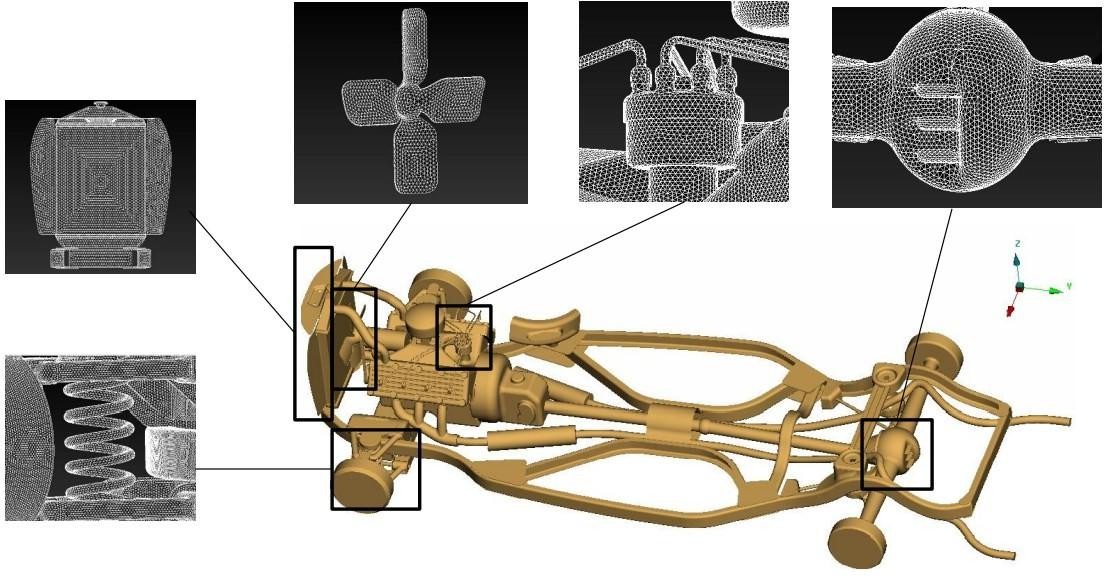
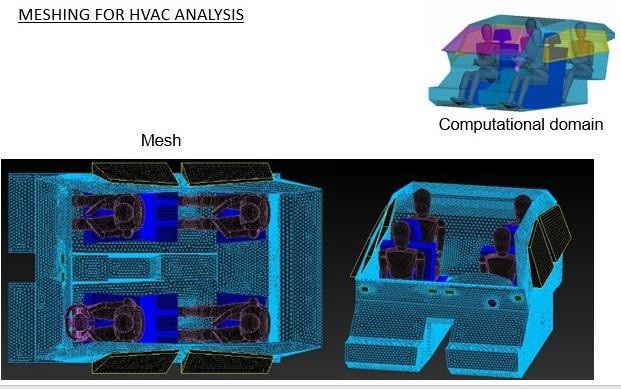
At FlowXplore, we provide expert CFD and FEA Mesh Optimization Services to improve simulation accuracy, mesh quality, and computational efficiency. We optimize mesh density, element quality, and local refinement to capture critical physical behavior while reducing unnecessary computational costs.
Our capabilities include surface and volume meshing, boundary layer refinement, tetrahedral and hexahedral mesh optimization, and mesh independence studies for reliable simulation results.
Improved Simulation Accuracy
Optimize mesh quality and resolution to capture critical engineering behavior in CFD and FEA simulations.
Reduced Computational Cost
Minimize unnecessary elements and optimize resource utilization for faster simulations.
Enhanced Solver Performance
Improve mesh quality and numerical stability to support reliable convergence and efficient analysis.
Optimize your mesh. Enhance simulation performance. Reduce computational costs.
01
CFD Mesh Optimization
We optimize computational meshes for fluid flow, heat transfer, and multiphysics simulations. Our approach ensures appropriate resolution in critical flow regions, including boundary layers, wakes, recirculation zones, and high-gradient regions.
Capabilities
Surface and volume mesh optimization
Boundary layer meshing and inflation layer refinement
Local mesh refinement in critical flow regions
Skewness, orthogonal quality, and aspect ratio improvement
Mesh optimization for turbulence and conjugate heat transfer simulations
Mesh independence studies and solution convergence assessment
02
FEA Mesh Optimization
Our FEA mesh optimization services improve element quality and structural analysis reliability while controlling model size and computational effort.
Capabilities
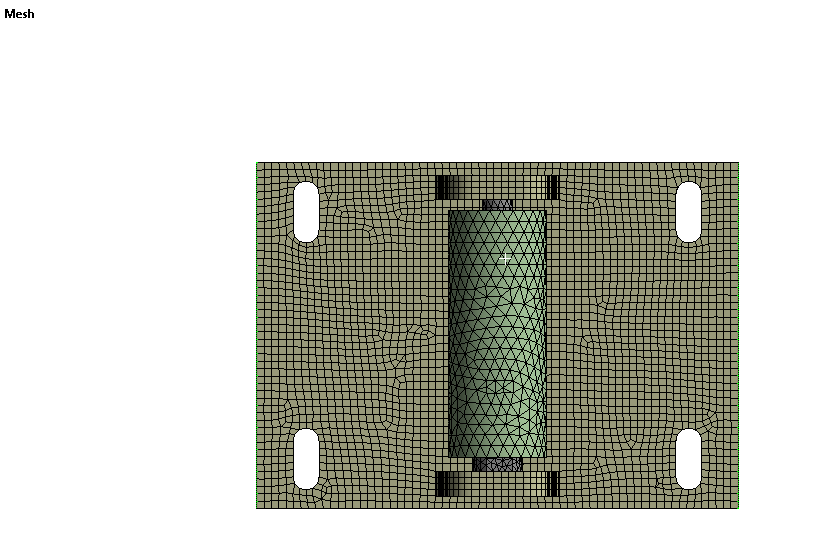
Tetrahedral and hexahedral mesh optimization
Shell and solid element mesh refinement
Local refinement around stress concentrations, holes, fillets, and contact regions
Element distortion and Jacobian quality checks
Mesh density optimization for linear and nonlinear structural analysis
Mesh convergence studies for result verification
03
Mesh Independence Studies
Mesh independence studies ensure the reliability and numerical accuracy of CFD and FEA simulations by evaluating solution sensitivity to mesh refinement.
Capabilities
Grid Convergence Assessment: Compare simulation results across progressively refined meshes to evaluate solution stability
Numerical Accuracy Validation: Assess discretization errors and convergence trends to establish mesh-independent solutions
Computational Efficiency: Optimize element size, mesh density, and computational resources without compromising accuracy
FlowXplore delivers mesh-independent simulation results for reliable engineering validation, design optimization, and performance prediction.
04
Geometry Cleanup and Defeaturing
Geometry cleanup and defeaturing are essential preprocessing steps in CFD and FEA to prepare CAD models for robust numerical simulation. FlowXplore simplifies complex geometries by removing unnecessary features, repairing surface defects, closing gaps, and eliminating sliver faces while preserving critical geometric characteristics.
Capabilities
CAD Geometry Repair: Identify and fix gaps, overlaps, surface intersections, and non-manifold edges
Feature Suppression: Remove small holes, fillets, chamfers, and minor details that do not significantly influence simulation results
Topology Optimization for Meshing: Simplify complex geometry to improve mesh quality, reduce element count, and minimize computational cost
Physics-Based Geometry Preservation: Retain critical features that influence flow behavior, stress concentrations, heat transfer, and structural performance
FlowXplore delivers simulation-ready CAD geometries that support efficient meshing, improved solver stability, and reliable CFD and FEA results.
CFD Simulation
Predict flow, heat, and multiphysics behaviour.
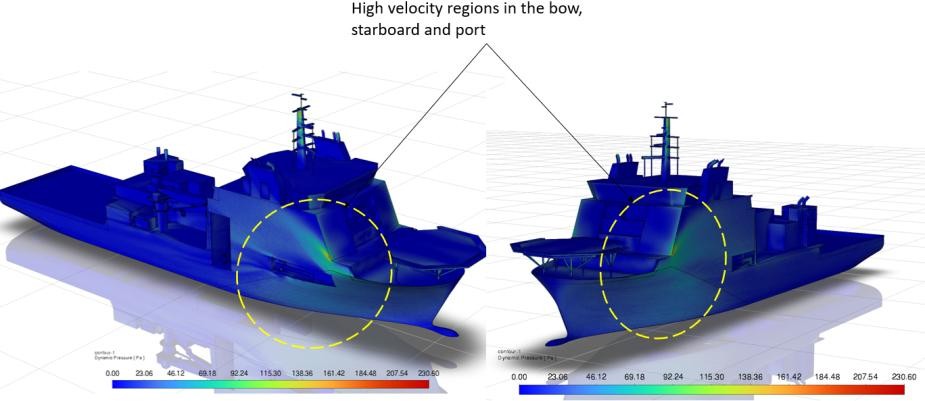
CFD Simulation (Computational Fluid Dynamics) uses numerical methods to simulate and analyze fluid flow, heat transfer, and related physical phenomena. It helps engineers predict real-world system behavior under different operating conditions.
CFD simulation supports virtual prototyping and design validation before physical testing. It helps optimize performance, improve energy efficiency, and identify potential design issues. By reducing physical prototypes and testing requirements, CFD minimizes development time and engineering costs.
01
Flow & Thermal Analysis
Flow and thermal analysis uses advanced CAE simulations to evaluate fluid dynamics and heat transfer, helping engineers optimize system performance and thermal efficiency.
Thermal Distribution: Identify temperature gradients, thermal hotspots, and heat dissipation
Heat Transfer: Analyze conduction, convection, radiation, and conjugate heat transfer (CHT)
Performance Optimization: Improve cooling efficiency, reduce energy losses, and enhance system reliability
Design Validation: Predict operating behavior and validate designs under real-world boundary conditions
02
Radiation Modelling
Radiation modelling uses advanced CAE simulations to predict radiative heat transfer between surfaces and surrounding environments. It helps engineers evaluate thermal radiation effects, temperature distribution, and overall heat transfer performance under operating conditions.
Capabilities
Radiative Heat Transfer: Evaluate surface-to-surface and surface-to-ambient radiation
Radiation Models: Apply suitable models such as Surface-to-Surface (S2S), Discrete Ordinates (DO), and Monte Carlo methods, depending on the application
Thermal Performance Optimization: Identify hotspots, improve thermal management, and enhance energy efficiency
FlowXplore delivers reliable radiation modelling to support thermal design validation, performance optimization, and engineering decision-making.
03
Multiphase Flow Simulation
Multiphase flow simulation uses advanced CFD techniques to analyze the interaction between two or more phases, such as liquid–gas, liquid–solid, and gas–solid systems. It helps engineers predict phase distribution, interfacial interactions, and complex flow behavior under real operating conditions.
Capabilities
Phase Interaction: Evaluate phase distribution, slip velocity, and interfacial forces
Advanced Modelling: Apply VOF, Eulerian, and Lagrangian approaches based on flow characteristics
Complex Flow Prediction: Analyze cavitation, bubbly flow, spray dynamics, and particle transport
Performance Optimization: Improve process efficiency, equipment reliability, and system performance
FlowXplore delivers reliable multiphase CFD simulations for engineering validation and process optimization.
04
Aeroacoustics Simulation
Aeroacoustics simulation uses advanced CFD and computational acoustics techniques to predict noise generated by turbulent airflow and fluid–structure interactions. It helps engineers identify noise sources, evaluate acoustic propagation, and optimize designs for improved acoustic performance.
Capabilities
Noise Source Identification: Predict aerodynamic noise generated by turbulence, vortices, and flow separation
Acoustic Modelling: Apply methods such as the Ffowcs Williams–Hawkings (FW-H) acoustic analogy
Noise Prediction: Evaluate sound pressure levels, frequency spectra, and acoustic directivity
Design Optimization: Reduce flow-induced noise and improve acoustic efficiency
FlowXplore provides aeroacoustics simulation services to support noise prediction, design validation, and engineering optimization.
05
Combustion Simulation
Combustion simulation uses advanced CFD techniques to analyze fuel–oxidizer mixing, chemical reactions, flame behavior, and heat release under operating conditions. It helps engineers predict combustion efficiency, temperature distribution, and pollutant formation to optimize system performance and improve thermal management.
Capabilities
Combustion Modelling: Simulate fuel oxidation, flame propagation, and chemical reaction kinetics
Thermal Analysis: Predict flame temperature, heat release rates, and temperature distribution
Emission Prediction: Evaluate the formation of NOx, CO, and other combustion products
Performance Optimization: Improve combustion efficiency, fuel utilization, and thermal performance
FlowXplore delivers reliable combustion CFD simulations for burner design, energy systems, and industrial process optimization.
06
Multispecies Transport Simulation
Multispecies transport simulation uses advanced CFD techniques to analyze the transport, diffusion, and mixing of multiple chemical species within fluid flows. It helps engineers predict species concentration, mass transfer, and reaction behavior under varying operating conditions.
Capabilities
Species Transport: Evaluate concentration fields, diffusion rates, and mass fractions
Mixing Analysis: Predict species distribution and mixing efficiency
Reactive Flow Modelling: Simulate chemical reactions and species consumption or generation
Process Optimization: Improve mixing performance, reaction efficiency, and system reliability
FlowXplore provides multispecies CFD simulation services for combustion systems, chemical processing, and industrial flow applications.
FEA Analysis
Validate structural integrity under real loads.
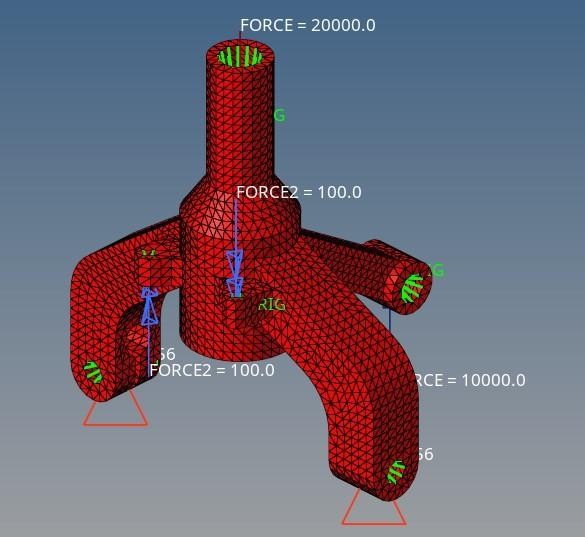
FEA Simulation (Finite Element Analysis) is a numerical method used to evaluate the structural behavior of components and systems under various operating conditions. It helps engineers predict stress, strain, deformation, and structural performance using virtual models.
FEA supports design validation by identifying potential failure points before physical prototyping. It improves product strength, reliability, and material utilization while optimizing designs. By reducing physical testing and design iterations, FEA helps minimize development time and engineering costs.
01
Static Structural Analysis
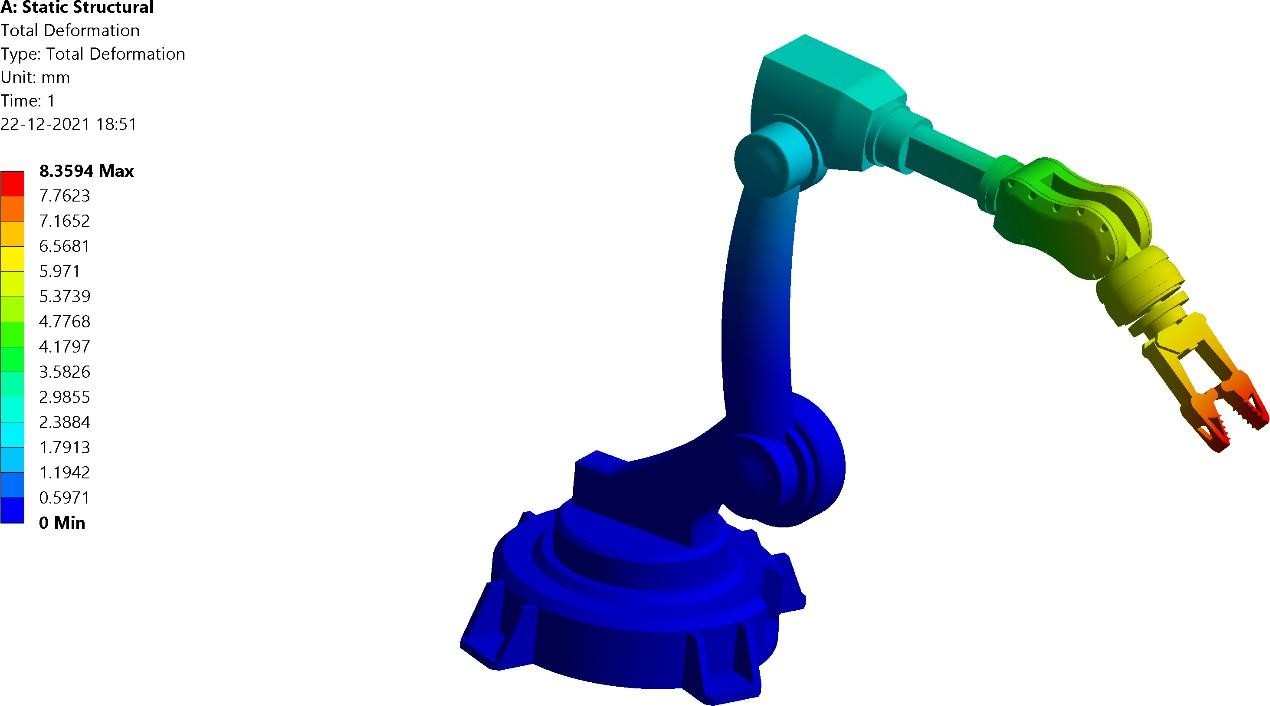
Static structural analysis uses Finite Element Analysis (FEA) to evaluate a component’s structural response under steady loads and boundary conditions. It helps engineers assess structural integrity, identify critical stress regions, and validate designs against strength and stiffness requirements.
Capabilities
Stress & Strain Evaluation: Identify stress concentrations and strain distribution
Deformation Assessment: Predict displacement and structural stiffness under applied loads
Failure Risk Evaluation: Assess yielding, factor of safety, and potential structural failure
Design Optimization: Improve component strength, reduce material usage, and enhance reliability
FlowXplore delivers accurate static structural simulation services to support design validation, weight optimization, and engineering reliability.
02
Thermal Analysis
Thermal analysis uses Finite Element Analysis (FEA) to evaluate temperature distribution and heat transfer within components under defined thermal loads and boundary conditions. It helps engineers assess thermal performance, identify hotspots, and ensure component reliability under operating temperatures.
Capabilities
Temperature Distribution: Predict temperature gradients and thermal hotspots
Heat Transfer Evaluation: Assess conduction, convection, and thermal radiation
Thermal Performance: Evaluate heat dissipation and temperature-dependent material behavior
FlowXplore provides thermal simulation services to support design validation, thermal performance optimization, and reliable product development.
03
Vibration Analysis
Vibration analysis uses Finite Element Analysis (FEA) to evaluate the dynamic response of components and structures subjected to oscillating forces and operational excitations. It helps engineers identify critical vibration characteristics, assess structural stability, and reduce the risk of fatigue-related failures.
Capabilities
Dynamic Response Evaluation: Predict vibration amplitudes, frequencies, and mode shapes
Resonance Assessment: Identify natural frequencies and potential resonance conditions
Fatigue Risk Evaluation: Assess vibration-induced stresses and potential fatigue damage
Design Optimization: Improve structural stiffness, durability, and vibration performance
FlowXplore delivers reliable vibration simulation services to support structural validation, noise and vibration reduction, and product reliability.
04
Fatigue Analysis
Fatigue analysis uses Finite Element Analysis (FEA) to predict the durability of components subjected to repeated or fluctuating loads. It helps engineers evaluate fatigue life, identify critical stress locations, and assess the risk of crack initiation and failure during service.
Capabilities
Fatigue Life Prediction: Estimate the number of cycles a component can withstand before failure
Stress Cycle Evaluation: Assess cyclic loading, stress amplitudes, and mean stress effects
Failure Risk Assessment: Identify fatigue-sensitive regions and potential crack initiation zones
Design Optimization: Improve component durability, reduce material failure, and enhance service life
FlowXplore provides fatigue simulation services to support durability assessment, design validation, and reliable product development.
05
Transient Structural Analysis
Transient structural analysis uses Finite Element Analysis (FEA) to evaluate the time-dependent response of structures subjected to dynamic loads and changing boundary conditions. It helps engineers predict structural behavior during impact events, sudden loading, and time-varying operating conditions.
Capabilities
Time-Dependent Response: Evaluate displacement, stress, and strain over time
Structural Integrity: Identify peak stresses, deformation, and potential failure locations
Design Optimization: Improve structural strength, durability, and performance under dynamic conditions
FlowXplore delivers transient structural simulation services to support engineering validation, dynamic performance assessment, and reliable product design.
Technical Resource Services
Engineering expertise that scales with your workload.
FlowXplore provides dedicated engineering resources and technical project support to help businesses scale their design and simulation capabilities. Our engineers support CAD modelling, CAE analysis, design development, and project execution, integrating seamlessly with client teams to meet technical requirements and project deadlines.
01
Dedicated Engineering Resources
Skilled CAD, CFD, and FEA engineers for project-specific requirements.
Get access to dedicated engineers who work as an extension of your in-house team. Whether you need continuous CFD/FEA support, design engineering assistance, or specialized simulation expertise, our resources align with your workflows, tools, standards, and project objectives.
We support
CFD & FEA analysis
CAD modelling and design support
Pre-processing and post-processing
Design optimization and validation
Engineering documentation and technical reporting
Ongoing simulation and development activities
Why FlowXplore: Dedicated technical ownership, consistent project knowledge, and flexible resource scaling based on your workload.
02
Project Support
Flexible engineering assistance for ongoing projects and workload demands.
Not every project requires a full-time engineering team. FlowXplore provides targeted technical support for specific projects, analysis requirements, design challenges, or development phases — from problem definition to simulation, interpretation, optimization and reporting.
Project support can include
Simulation setup and execution
Complex CFD & FEA studies
Design verification and validation
Troubleshooting and root-cause analysis
Design optimization
Technical reviews and engineering recommendations
Project-based engineering documentation
Why FlowXplore: Focused expertise, faster execution, and technical support without committing to long-term resource requirements.
03
Design Associate
Support for 3D modelling, drafting, design modifications, and engineering documentation.
Our Design Associate offering combines design thinking, engineering analysis and simulation to transform concepts into technically validated solutions. We work closely with design and R&D teams to evaluate alternatives, identify performance limitations, and improve product behaviour before costly physical iterations.
Our design collaboration includes
Concept and product design support
2D & 3D CAD modelling
Design modifications and iterations
Simulation-driven design development
Design optimization
Performance assessment
Prototype-ready engineering support
Why FlowXplore: Design decisions backed by engineering science — helping teams move from “Will it work?” to “Why will it work, and how can we make it better?”
Ready to validate your next design?
Talk to our engineers about mesh, CFD, FEA, or embedded technical resources.